






Renewable Energy Alternatives in Thailand: Why "Buying RECs" Matters for Net Zero & Global Energy Trends
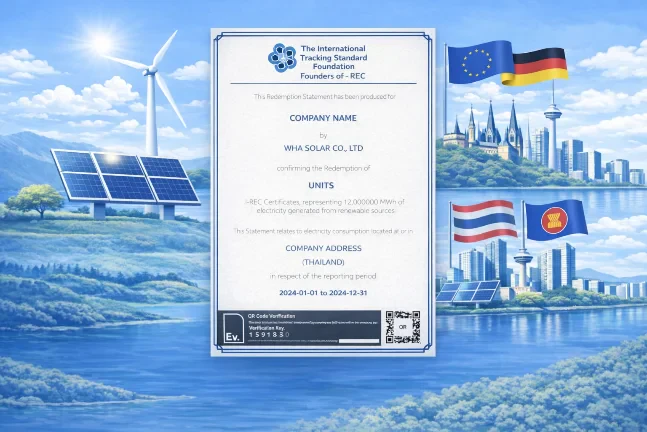
A Renewable Energy Certificate (REC) is a mechanism that enables organizations to transparently verify that 1 MWh of electricity is legitimately claimed from a renewable energy source. This procurement proof can be reported to reduce Scope 2 emissions under international standards such as the GHG Protocol, CDP, and RE100. The clearest benefit is that organizations can increase their renewable energy ratio to meet targets without committing massive upfront capital on day one. Furthermore, RECs offer annual budget flexibility, allowing companies with fluctuating production output to scale their purchases up or down based on actual electricity loads each fiscal year.
3 Main Clean Energy Pathways for Organizations in Thailand
1) Own Renewable Projects
For many Thai companies, the first choice is self-installing Solar—whether Solar Rooftop, Solar Carpark, or Floating Solar. The core strengths are long-term electricity bill savings and direct renewable claims, boosting brand image among investors and customers. However, self-investment requires considering high initial capital outlay, multi-year payback periods, maintenance costs (panel cleaning/spare parts), roof structural readiness, and engineering constraints. Coupling the system with a Battery Energy Storage System (BESS) significantly enhances system stability.
2) Private Power Purchase Agreement (Private PPA)
Many organizations consider self-investing in power generation risky in terms of capital expenditure and system management. They choose a Private PPA approach where third-party investors design, install, and manage the entire system. Electricity users pay for the actual energy consumed at a discounted rate specified in the PPA contract—typically lower than grid tariffs. Environmental attributes are governed under the investor agreement. Key considerations include long-term contract commitments, performance guarantee terms, and price flexibility as electricity loads shift over time.
3) Utility Green Tariff (UGT1 and UGT2)
To serve growing demand, Thailand developed the Utility Green Tariff (UGT) scheme. UGT1 allows buyers to purchase grid electricity bundled with RECs without selecting the specific renewable source type. UGT2 enables buyers to select specific project types (e.g., Solar, Wind) under long-term contracts. Key limitations companies note are high minimum purchase volumes and rigid pricing compared to private provider models. However, ongoing regulatory adjustments to enhance UGT flexibility could make it increasingly attractive for mid-to-large energy users.
Clean Energy via RECs: A Complementary Choice for Businesses
Beyond the three main pathways, purchasing RECs is rapidly gaining popularity in Thailand. Many companies cannot install onsite solar due to physical space, budget, or landlord restrictions. Even companies with existing solar systems often fall short of annually increasing Scope 2 targets. RECs act as a "bridge" to accelerate target achievement by matching exact annual electricity loads, eliminating risks of over or under-procurement and allowing finance teams to manage cash flow efficiently.
Communication-wise, RECs offer traceable registry records recognized in global ESG disclosures. Organizations should establish clear purchasing criteria covering technology type, geographic origin, vintage year, and additionality principles.
Renewable Energy Trends: Asia–Europe Lessons for Thailand
Europe has long utilized Guarantees of Origin (GO), allowing multinational corporations to maintain standardized procurement across multiple countries. Meanwhile, Asia and ASEAN are accelerating market structures to accommodate industrial manufacturers and hyperscale data centers. Thailand’s key trend is blending multiple mechanisms—combining UGT, Private PPAs, and RECs—to create a cost-effective, high-impact renewable energy portfolio for the mid-to-long term.