






How to Register and Trade I-RECs in Thailand: A Complete Guide from Power Producers to Consumers
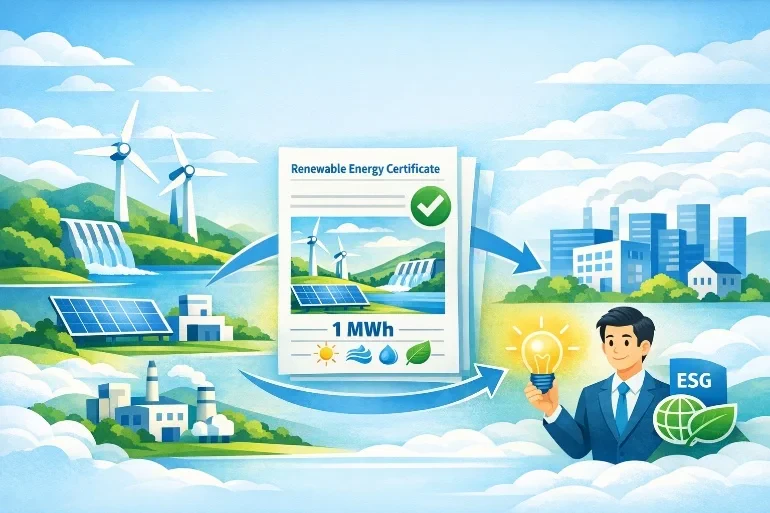
A Renewable Energy Certificate (REC) is a certificate verifying that 1 MWh of electricity was generated from renewable sources such as Solar, Wind, Hydro, or Biomass. It enables organizations to manage Scope 2 emissions transparently and traceably according to international I-REC (E) standards. Concurrently, RECs align with ESG reporting, RE100, Net-Zero targets, and frameworks like GHG Protocol, CDP, and SBTi.
The Buyer Side (REC Buyer): Why Do Organizations Buy RECs?
Organizations seeking to claim renewable energy usage with credible, presentable evidence choose "buying RECs". The primary reason is that RECs follow international standards, allowing parent companies or overseas affiliates to easily audit the data. Many clients initiate REC procurement after supply chain partners require them to reach Renewable Energy targets urgently. Additionally, RECs undergo verification systems accepted by major reporting standards, including the GHG Protocol, CDP, and RE100.
Key Benefits of Buying RECs
- Reduces Scope 2 greenhouse gas emissions.
- Flexible contract terms with customizable details and requirements.
- Complies with international reporting standards such as SBTi, CDP Standard, GRI, and RE100.
- Ideal for factories with clear Renewable Energy targets that lack rooftop space for Solar or are not ready for a PPA.
Step-by-Step Guide for REC Buyers
- Estimate Required Volume (MWh/year): Based on annual corporate electrical load.
- Select REC Technology: Solar, Wind, Biomass, or Hydro matching ESG goals.
- Choose Vintage Year: Match the reporting period (e.g., 2026 production for 2026 reporting).
- Procure via Certified Aggregators: Purchase through authorized developers like WHA Utilities & Power.
- Issuance & Redemption: Seller executes redemption stating buyer details (Company Name, Address, Purpose).
- Reporting: Apply certificates toward ESG, CDP, and Carbon Accounting disclosures.
The Seller Side (REC Seller)
REC sellers are typically project owners or renewable energy generators in Thailand. They register projects to separate and sell environmental attributes independently. Once audited by EGAT, sellers submit monthly generation and consumption evidence to issue units. The trading transaction then occurs within a "Participant Account," referred to as the Redemption phase.
Official I-REC Registration Process with EGAT in Thailand
Step 1: Registrant Registration
Power producers or agents create an account on the Evident Registry by submitting Form SF01, Standard Terms & Conditions (STC), and corporate documents (KYC/AML process takes 3–4 weeks).
Step 2: Production Facility Registration
Submit Form SF02 along with project photos, PPA agreements, Single Line Diagrams (SLD), meter calibration reports, and factory licenses for EGAT inspection.
Step 3: REC Issuance
Upon production verification, submit Form SF04 (Issue Request) to instruct EGAT to issue RECs in the Evident Registry.
Factors to Consider When Choosing a REC Service Provider
Trading RECs requires opening a specialized Participant Account on the Evident platform.
Why Don't Most Corporations Open Their Own Participant Account?
- Requires deep technical expertise in REC systems.
- Incurs ongoing account maintenance costs.
- Complex transaction procedures requiring experienced handlers.
Consequently, only a select few fully certified REC providers in Thailand offer end-to-end management.
WHA Utilities and Power Plc. (WHAUP): Leading Certified REC Provider
- Authorized Participant Account Holder: As an active developer and operator of Renewable Energy projects, WHAUP provides high-quality, fully traceable RECs.
- Renewable Energy Transition Expertise: Beyond REC supply, WHAUP delivers complete decarbonization planning—including Solar Rooftops, Direct PPAs, and Energy Management to drive long-term Net Zero success.