







REC vs Carbon Credit: What is the Difference and Which Should You Buy for ESG & Net Zero Goals?

Renewable energy and carbon reduction are at the heart of organizations striving toward Net Zero. This has made "REC" (Renewable Energy Certificate) and "Carbon Credit" top search terms in Thailand for 2026. However, many organizations remain confused about how these two differ, whether they can be used interchangeably, and which one to choose. This article provides a clear summary with practical examples and pre-purchase guidance.
What is a REC?
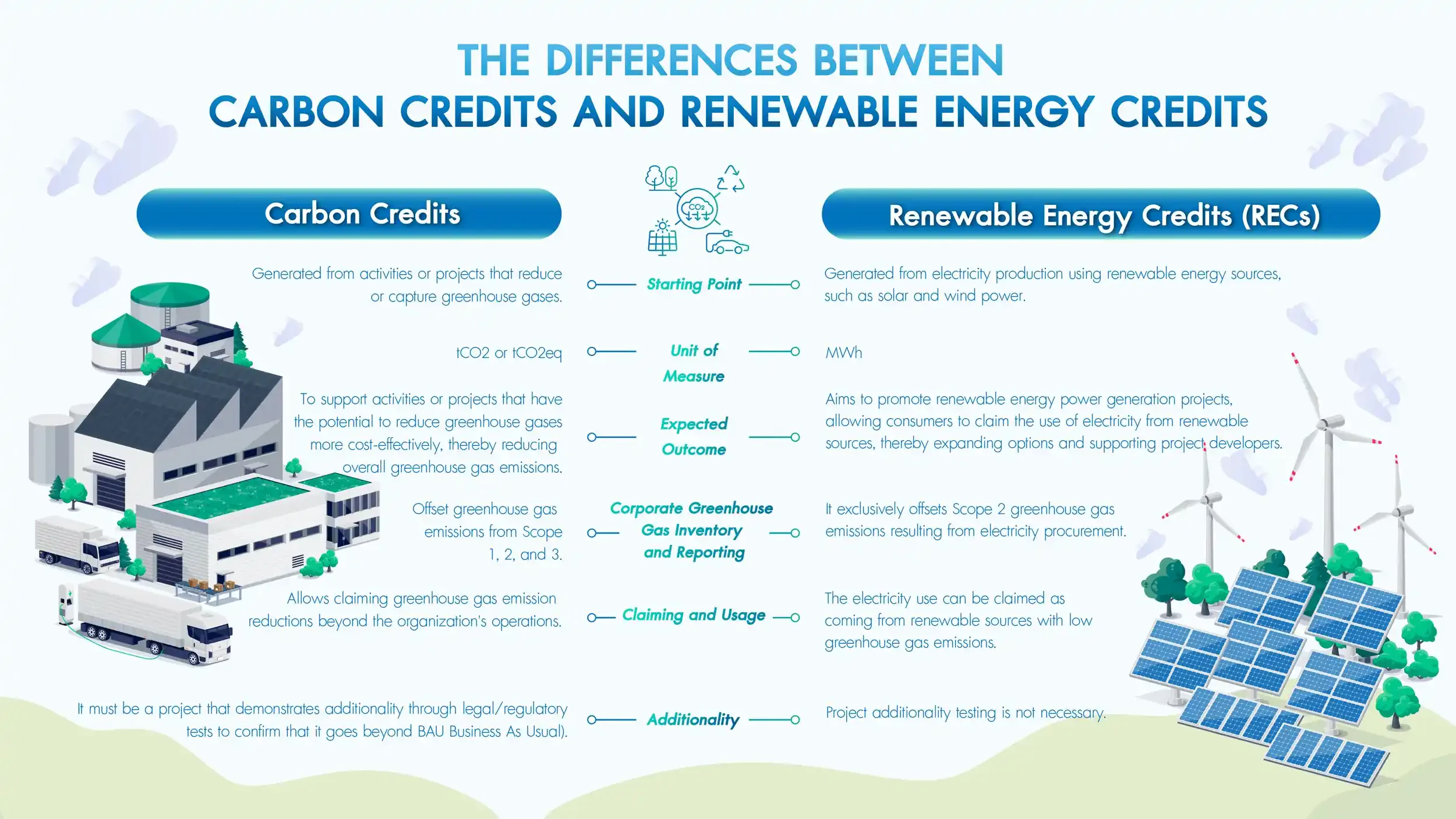
A Renewable Energy Certificate (REC) verifies renewable energy usage, where 1 REC equals 1 MWh of electricity generated from renewable sources like Solar, Wind, or Biomass.
Used To:
- Claim renewable energy consumption (Scope 2).
- Increase corporate Renewable Energy targets.
RECs are purchased as "Unbundled Certificates," meaning they are bought separately from physical electricity supply. This allows organizations to increase clean energy ratios with standardized, traceable proof through official certificates—making RECs a popular mechanism for corporate decarbonization.
What is a Carbon Credit?
A Carbon Credit represents the reduction or removal of greenhouse gases, measured in units of 1 metric ton of carbon dioxide equivalent (TonCO2eq) Credits are generated from various certified projects, including:
- Renewable energy projects
- Waste management initiatives
- Reforestation and forestry projects
Carbon Credits are used to offset an organization's overall emissions. Traded in TonCO2eqcompanies must first calculate their organizational carbon footprint before purchasing carbon credits.
Key Factors Driving the REC Market
1) Technology Type:
Solar and Wind are internationally favored due to zero-carbon ratings, whereas Hydro and Biomass involve internal operational power usage.
2) Vintage Year:
Vintage should match the reporting year per GHG Protocol guidelines for smooth auditing.
3) Market Volume:
Over 5 million MWh traded annually in Thailand. Consolidating corporate group volume lowers unit costs.
4) Price Trends:
Pricing varies by tech and vintage; WHAUP provides transparent market pricing.
Key Factors Driving the Carbon Credit & T-VER Market
1) Project Type:
Carbon Neutral accepts reduction projects; Net Zero requires carbon removal projects (e.g., Forestry).
2) Vintage Year:
Buyers prefer vintage years matching their ESG reporting period.
3) Market Activity:
Pending the Draft Climate Change Act (Carbon Pricing, Carbon Tax, ETS, Climate Fund).
4) Price Factors:
Voluntary projects carry high verification costs. Companies are shifting focus toward real reduction mechanisms like ETS and Carbon Taxonomy.
Summary: Should You Choose RECs or Carbon Credits?
- Choose RECs: If your goal is to "verify renewable electricity consumption" and handle Scope 2 emissions.
- Choose Carbon Credits: If your goal is to "offset total emissions" to achieve Carbon Neutral or Net Zero status.
Both tools complement each other. Understanding technology types, vintage years, and market dynamics ensures cost-effective climate planning.